I was on the ferry from Catalina Island headed to San Pedro, sitting in the shade, taking in the late summer sun while watching a pod of dolphins leap between our bow waves.
As we approached the port, our boat began navigating through an industrial shipping yard lined with towering cranes. Two college-age guys plopped down next to me. As we passed by the tall cranes, the following conversation took place:
"Dude, what if someone jumped from up there?"
"They'd die, for real!"
"Well like, how deep do you think you'd go if you jumped from up there?"
"12 feet," (said with a sense of absolute authority)
"No way, you'd go way deeper than that brah!"
"Nope. 12 feet."
I can't recall what was said after that because I couldn't get over the attitude of the guy. 12 feet? Seriously? Off one of these fuckin' things?

Surely you jest, bro!
But then it got me thinking about what the right number -- even the right ballpark -- would be. I spent the rest of the time on the boat (and a good part of the Uber ride home) thinking about how to reason about the claim.
How a Rocket Scientist Thinks🔗
Sheldon Cooper once referred to engineers as the "Oompa Loompas of science," but I like to think of our profession as "artisans of the pragmatic." We're curious problem-solvers who understand that an idea that only works on paper is... well, a waste of paper.
"If someone jumps off of a port crane, then: (1) how deep into the water do they go, and (2) do they die in the process?" is exactly the kind of inscrutable question that reaches engineers in the defense industry by way of military liaisons from time to time. Then you answer it and find out you just built Skyhook.
In this case, Ferry Bro has made some unsubtantiated claims which we'll rephrase as questions:
If someone jumps from one of the cranes at the Port of Los Angeles on a normal summer day, how deep into the water do they go before they start to rise back to the surface?
And:
Do they die?
Really, we are only interested in answers to these questions insofar as we want to validate the claims that the diver reaches a depth of 12 feet and also dies. We'll compare the math against the claims and see:
- Are these claims accurate under normal conditions?
- If not, what conditions have to be present to make the claims accurate?
- Are the conditions that make the claim accurate themselves reasonable?
That sounds straightforward until you try to define what any of those words mean.

First Problem: What Are We Even Asking?🔗
I operate on a first principle of "you can't solve a problem you don't understand." That's as true in engineering as it is anywhere else in life. If we're going to talk and reason about a thing, we need to understand it in the first place.
Try to parse out the claim, and pretty quickly you'll realize that what wasn't said may be more critical than what was said. Like when Ferry Bro said that a jumper would go 12 feet into the water, how is he measuring this depth? Are we measuring from the ocean surface to the tips of the diver's toes, or the top of his head? And does Ferry Bro literally mean "12 feet exactly?" Or is it more of a rounding thing, like anywhere from 11'6" to 12'5"? Or 12'0" to 12'11"?
And that question raises another, which is how was Ferry Bro imagining a diver's jump? Was it a belly-flop? A swan dive? Feet-first? Flailing and screaming like a parrot?
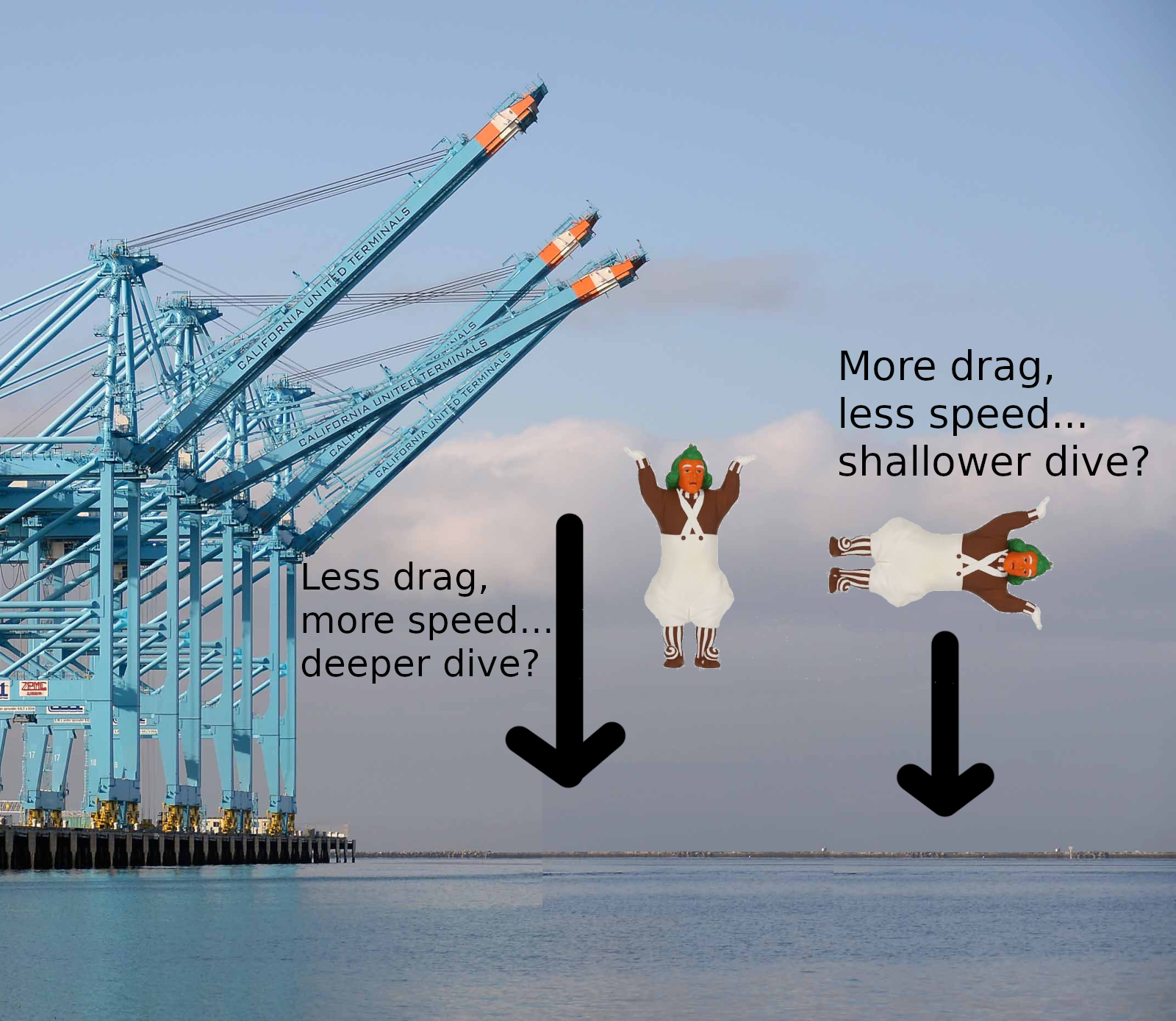
How much energy is typically lost in a collision with the water? Is there an estimate, or can we infer it from some other measurement? Does it even matter? If we assume no energy is lost whatsoever, and the answer comes out to be 6 feet or something less than 12, then we know right away that the claim was bullshit. But if the answer is, say, 30 feet, then it raises the question of how much energy would need to be lost in the collision to end up with a 12 foot dive?
Finally, how is bro calibrating on survivabilty of the jump? He didn't equivocate on the diver's fate. We can certainly evaluate survivability, but the human body is surprisingly resiliant. People have survived failed parachutes and bullets to the head. At what point do we declare the dive fatal for all practical purposes? 75%? 90%? 100%?
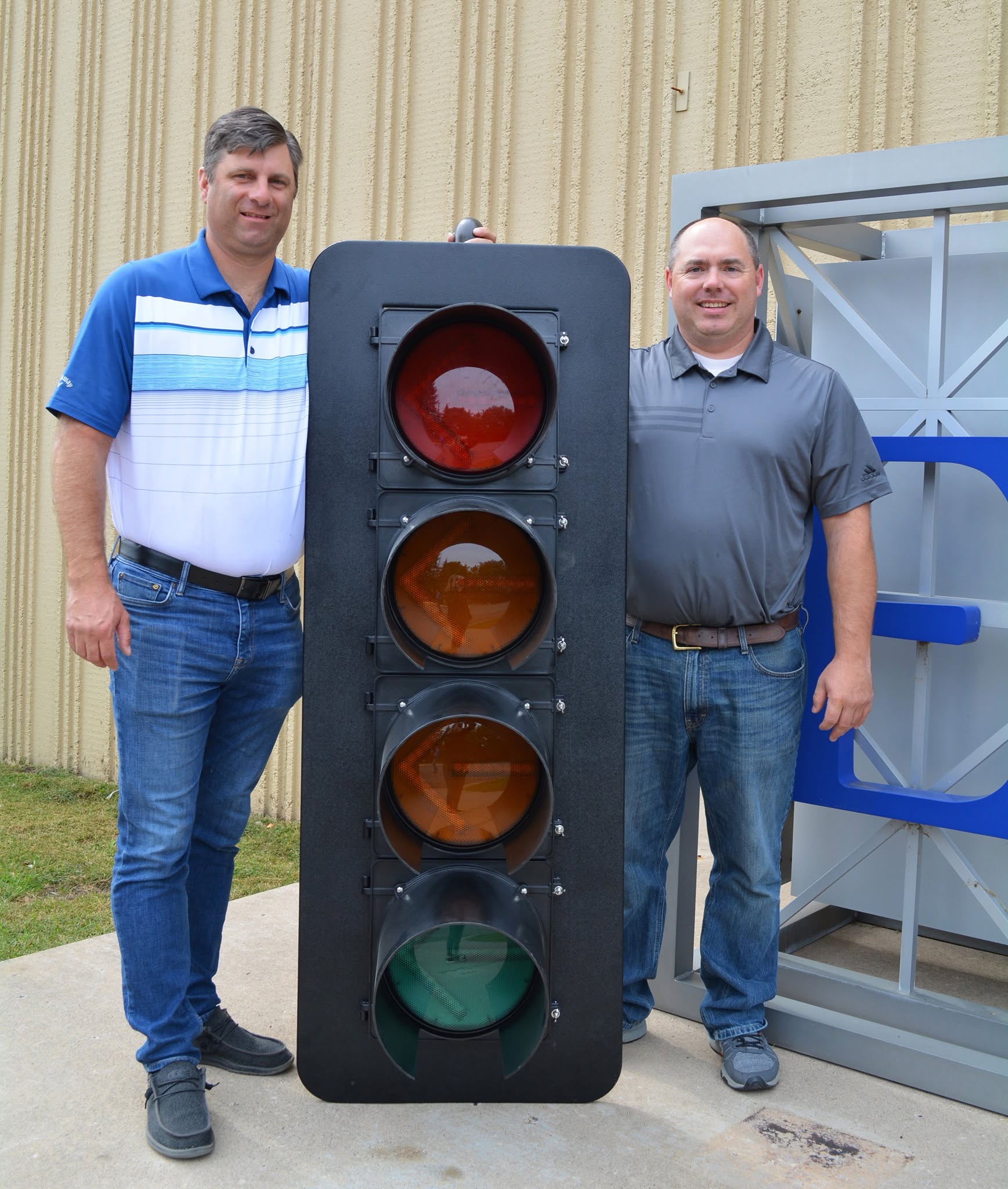
Does Ferry Bro even have an accurate idea of how tall those cranes are? Do I? Humans are terrible at estimating the size of things we don't directly interact with regularly. You see traffic lights every day, but have you ever stood next to one?
This is the nature of the thoughts I have when trying to wrap my head around the question.
The more I thought about it, the more I realized an obvious answer wasn't forthcoming because I knew the shape of the answer, but not the specifics, and devil is in the details. Turns out the hard part of engineering isn't solving an equation as much as figuring out what question the equation is supposed to answer.
The Shape of The Answer🔗
Let's call our theoretical diver "Bob." In my mental model, Bob experiences 3 distinct phases on his journey:
- Free-fall. Bob starts from rest, and accelerates towards the water under gravity. This motion is opposed by drag forces, slowing his acceleration. This phase is the easiest one to model, and you'll probably find an example of it in a college physics textbook. It's also just an ordinary differential equation with a classical solution.
- Entering the water. He hits the water at some speed, and transitions from gas (air) drag to fluid (water) drag. This one is brutal to model because in reality, a human will not remain perfectly rigid colliding with the water at high speed. He will flex and some of his kinetic energy will transfer to his bones and organs. The impact will break surface tension and transfer energy to the surrounding fluid, all of which translates to less energy available to drop down to the deepest point. There's no classical solution to this, and you'd need considerable resources to model it accurately.
- Moving through the water. This one is somewhere in between; it's the same equation as (1), but now there is a buoyant force acting on Bob, which also slows him down.
At this point, we can start to make some assumptions about the problem to lend clarity where it's lacking. I said earlier that sometimes what's not said is more critical than what is stated. This is why calling out your assumptions is critical.
My zeroeth assumption was that someone probably did this work already. So I Googled around to see what I could find, and came up empty. Not many scientists out there have the stones to throw subjects off higher and higher cranes to see how deep they go and when they start dying. So we get to do the dirty work.
I'm not getting paid to answer this question, so "good enough" is all we really need. If an assumption makes the problem 100x easier to solve at a cost of 1-2% accuracy, then we're going to do it and call it good. If someone wants to pay a few million to work out those last few significant digits, they know how to find me.
Beyond that, Bob is an average-sized human, jumping feet-first in normal atmospheric conditions into normal seawater. We'll assume low-drag clothing and a clean 90° entry.
Most importantly, Bob is a rigid body. He's a Stoic and won't flail around in terror, because we lack mathematical models for how existential dread affects motion.
I'll measure depth from both his leading and trailing edges, since Ferry Bro didn't specify which he meant. And we'll call his "12 feet" claim good if it lands somewhere in the neighborhood of 12 feet rather than requiring an exact 12'0".
So we have a problem and made some reasonable assumptions to eliminate any obvious ambiguities. We're left with all sorts of variables: the relative densities (the air at sea level, seawater, the diver [ie, a "rotund" diver will have a greater bouyant resistance than a lean one]), the drag coefficients on the diver in the air and in the water (will they be the same or different?)
Fun With Physics🔗
With reasonable assumptions to fill in any ambiguities, we can start modeling the scenario. I mentioned before that the equations are pretty standard. When Bob steps off the crane, we assume he begins with 0 velocity, and is only acted upon by gravity and drag. That equation simply looks like:

where:

Thus the equation can be rewritten to express the speed of the diver after falling from an arbitrary height, y*, as:

So at the end of phase 1, v1 after falling from an arbitrary height, H, the diver's velocity is:

(Note that with a sufficiently large H, the e factor becomes roughly 0 and this equation reduces to terminal velocity. Proof is left as an exercise for the reader.)
So if H is the height of the crane, then we know with a pretty high degree of accuracy how fast the diver is moving when they hit the water.
Entering the water is, as mentioned, extremely complex to model accurately with a squishy human. We already established that we'll do the initial analysis using a rigid body instead, just to get a ballpark answer.
So if we assume that some factor, KE = 0..1, representing % of kinetic energy lost during phase 2, we can express Bob's motion in phase 3 as:

where:

We can simplify a bit:

where:

Which has a solution of:

Or, in terms of our variables:

The model shows the "shape" of the answer, essentially that higher velocities offer diminishing returns on maximum depth reached. We know that the velocity upon entering the water is:

Substituting that into our dmax function gives:

Wow, that's a mouthful. But it lets us model the maximum depth the diver reaches over a wide range of jumps and energy losses on collision.
This is what I mean by the "shape" of the answer. Without knowing anything else, we can see that jumping from higher elevations will yield diminishing returns the maximum depth reached in the water, up to some asymptotic value. That makes logical sense, because that's how terminal velocity works.
Something else that's actually really interesting: there's no gravitational constant. Bob's motion is dictated almost entirely the ratios: media density, drag coefficients, masses (diver vs displaced seawater), etc. I don't think I would have guessed that result.
Our task now is to fill in the blanks and see where it ends up.
Research🔗
Sometimes in engineering, a problem involves variables that no one has ever measured before. The analysis isn't possible without figuring out how to work out or measure some other thing that isn't directly related to the immediate problem. And sometimes that variable introduces new variables that have never been measured. You end up spending 90% of your efforts on seemingly-unrelated questions to fill in gaps that fill in gaps that ultimately let you address the specific problem you started with. (See: Yak Shaving.)
Fortunately, all of the variables we're thinking about, like drag coefficients and relative densities are very well-known. We won't have to do any yak-shaving here. This is all we need to model Bob's motion:
- Density of the air: 1.229 kg/m3
- Density of the water: 1,030 kg/m3
- Density of Bob (typical human): 980.0 kg/m3
- Bob's mass: 81.6kg (~180 lbs)
- Bob's height: 1.829m (6 ft)
- Bob's cross-sectional area: 0.18 m2
- Drag coeffient in the air: 0.7
- Drag coefficient in the water: 0.6
The height at which Bob is jumping (in meters), and how much energy is lost in colliding with the water are both treated as variables. For the crane height, we could just look up what they are in San Pedro (75 meters when in use, and 105 meters in a "stowed" position). But I like the idea of seeing a range of jump heights.
For the energy loss, the specifics of how Bob crumples and distorts and affects the local fluids is inconsequential. All we know is that it happens and needs to be accounted for. We can lump these complex interactions under a general "% of kinetic energy lost in collision" label, and see how it affects depth of dive over a range of 0% to 100% in whatever increments we want.
Commence to Cipherin'🔗
We know from our very first equation that the maximum velocity we would expect would be equal to the terminal velocity of the diver. Ergo, the "ceiling" on how deep Bob will go is achieved at terminal velocity, assuming 0% energy lost:


When we punch in our variables, we get a ceiling of ~17 ft of water above Bob's head, assuming he hits the water at terminal velocity and doesn't lose any energy in the process. Hmm... Ferry Bro's theory may be busted, but it wasn't far off. Let's punch this into a spreadsheet and get some fast numbers.
I created a basic chart in LibreOffice that shows the dive depths vs dive heights. The gold region where the ranges intersect is where we consider Ferry Bro's claim justified:
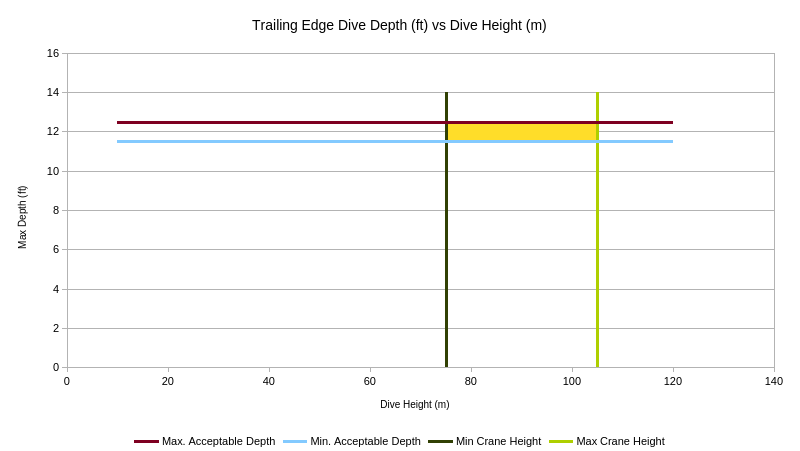
Let's overlay this with a couple of curves for 0%, 10%, 20% and 30% losses in kinetic energy and omfg wtf:
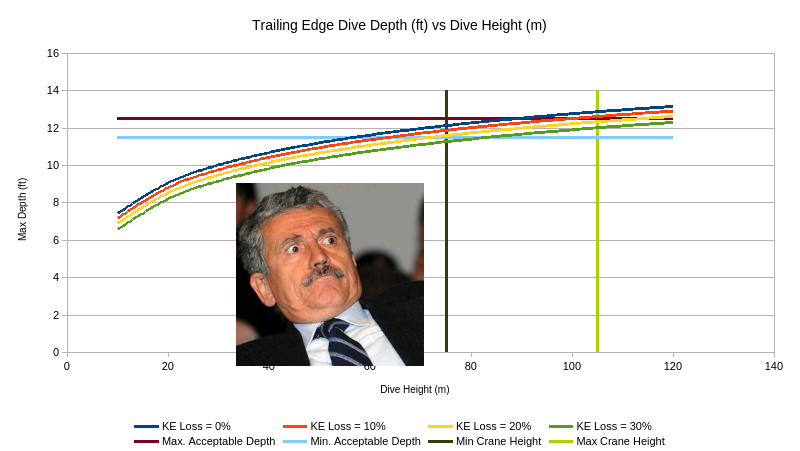
There are a few things happening here, but the headline is Ferry Bro's 12 foot claim is startlingly accurate, given the things that we know about the cranes, relative densities, etc.
The numbers tell us that if Bob jumped from the crane at its operational height, he will indeed have ~12ft of water over his head before he starts floating back up to the surface. In fact, even if Bob jumps from the crane at its highest, "stowed" position, he'll still have less than 13 ft over his head at the end of the dive.
It also says that even if Bob lost 30% of his kinetic energy on collision, it wouldn't change his ultimate depth very much. Which is honestly surprising.
Final Principles: "A Solution You Don't Understand Isn't A Solution"🔗
I'm confident the math is correct, which is actually a strong signal that I should pause and reconsider from another angle. I recall an (apocryphal) story from Ian Stewart's book Concepts of Modern Mathematics:
A certain theoretical physicist secured himself a mighty reputation on the basis of his deduction, on very general mathematical grounds, of a formula for the radius of the universe... It was several years before anybody had enough curiosity to substitute the numbers in it and work out the answer.
Ten centimeters.
I don't know if that's true, but I do know that I've looked at a lot of sophisticated analyses in my life that had absolutely garbage conclusions. Sometimes the result is ambiguous in that it can support several valid interpretations. More analysis is needed to disambiguate.
In any case, the important bit isn't whether the conclusion satisfies your priors, it's whether the conclusion is logically reconcileable with reality. If your analysis doesn't match reality, it's wrong and needs to be redone.
So: Can I disprove my own findings?
Challenge The Findings🔗
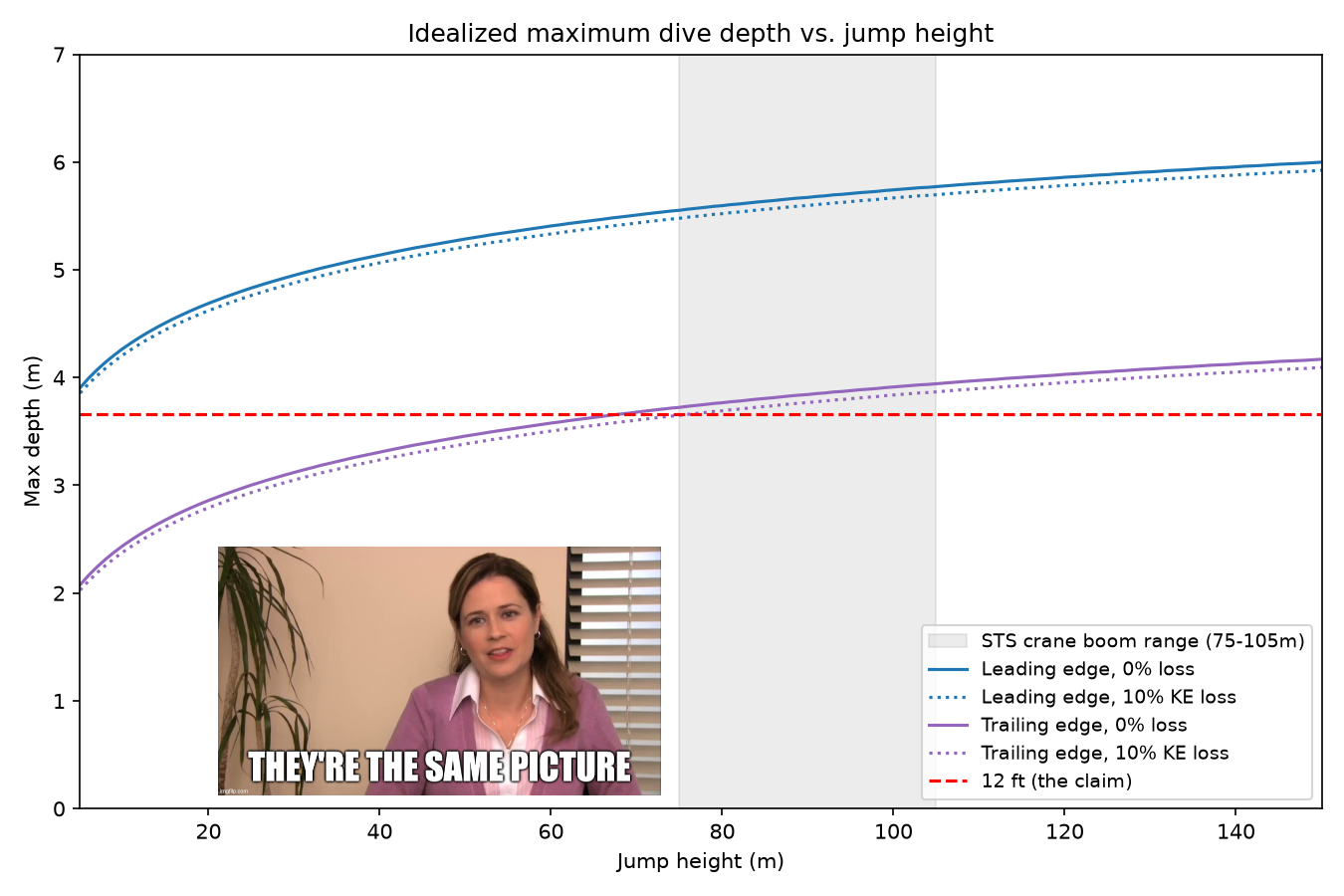
Not content to let a spreadsheet be the arbiter of truth in a physics problem, I turned to Python. Instead of punching numbers into a formula that I'd come up with based on physics and calculus, I instead relied on numerical analysis, calculating Bob's motion at a point in time, then incrementing the time by a little bit and recalculating, all the way until he comes to a stop in the water and starts to rise back up.
And here's what I got:
Well, shit.
Two different approaches, one analytical and one numerical, were giving me essentially the same answer. At this point the interesting question was no longer whether I'd made an obvious algebra mistake. It was why my intuition (and maybe yours?) had been so convinced that 12 ft sounded ridiculous.
What about the other claim? Does Bob survive the plunge? Very likely no. This is how fast he's moving when he hits the water from various heights:
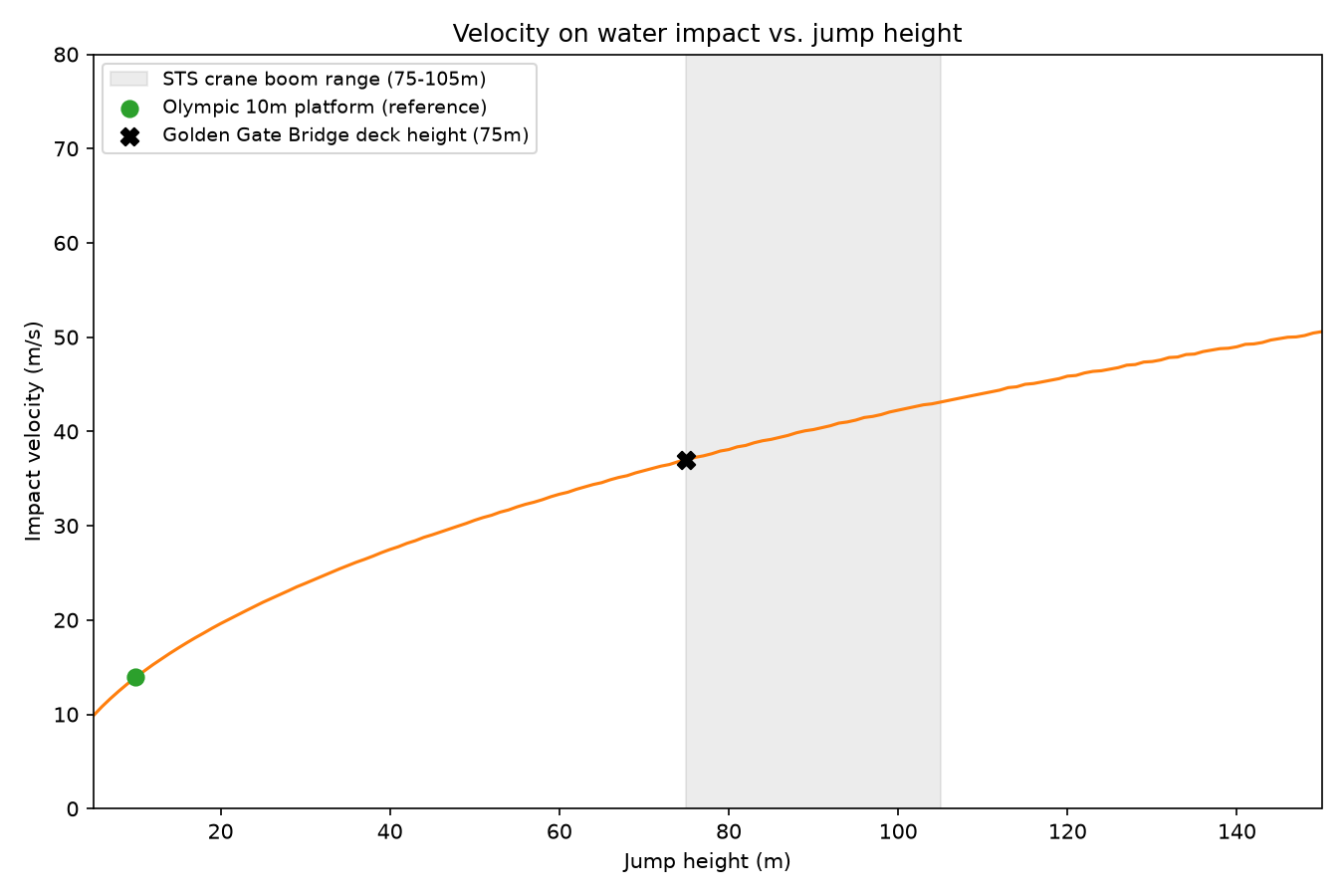
So Bob hits the water about 2.7x faster than an Olympic high-diver, and just about as fast as someone jumping off the Golden Gate Bridge (more on that in a minute).
What makes this so fatal is seawater being almost 1000x more dense than air. It slows Bob down extremely fast. Interestingly, the amount of time it takes Bob to reach his deepest dive is very nearly constant:
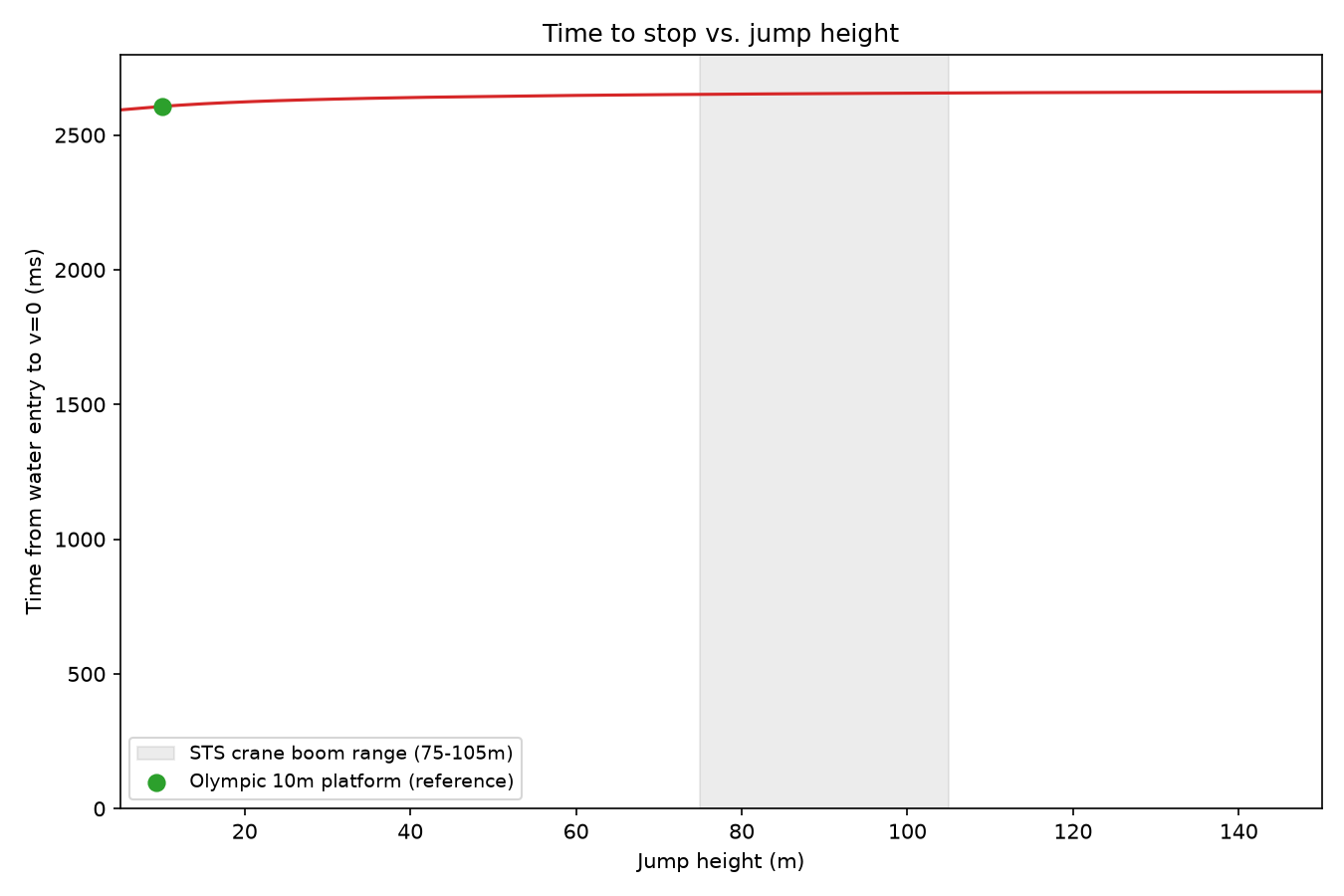
So entry speed increases logarithmically, but stopping time doesn't change much at all. Meaning deceleration (which is so large, we measure it in factors of the gravitational constant) is overwhelming:
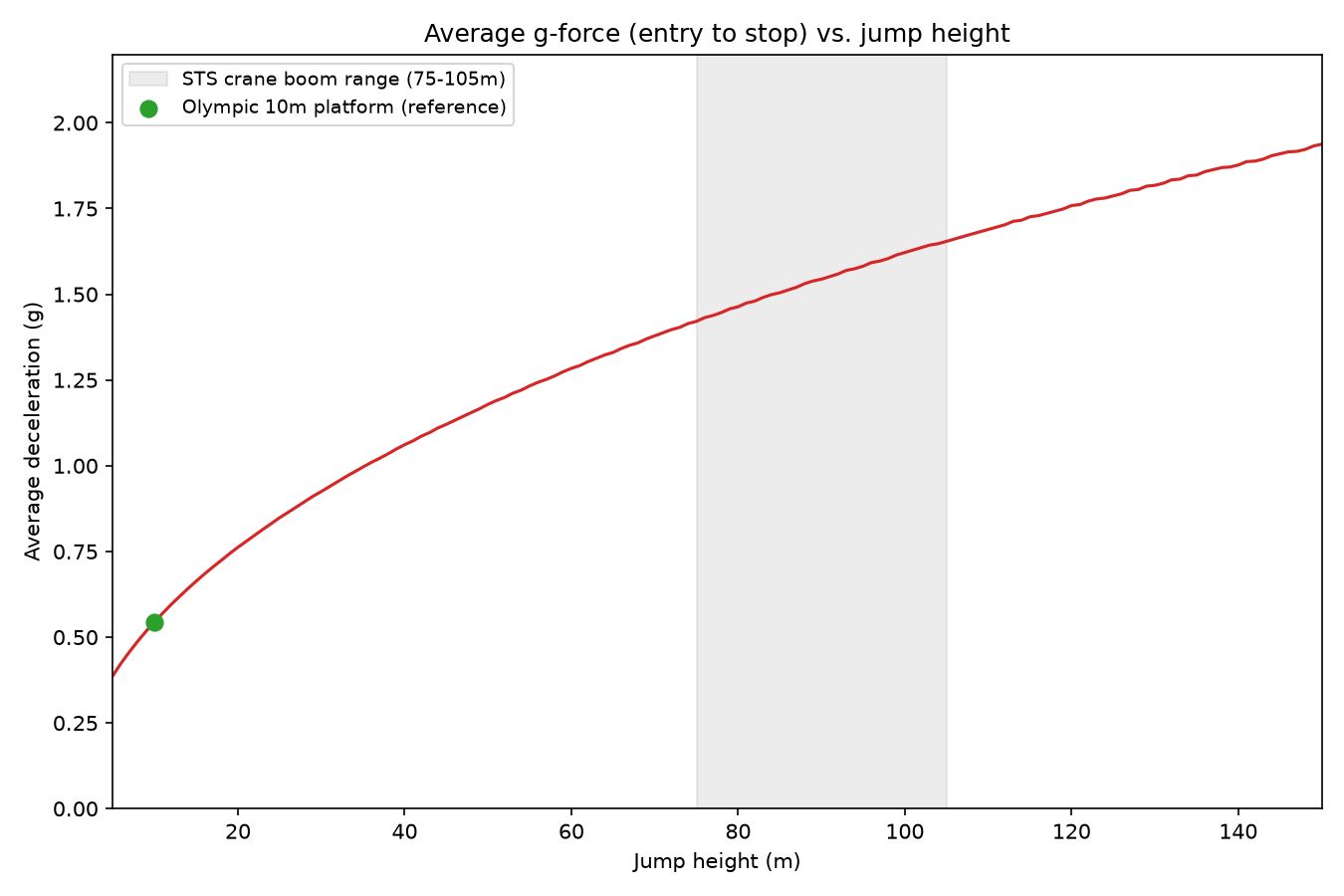
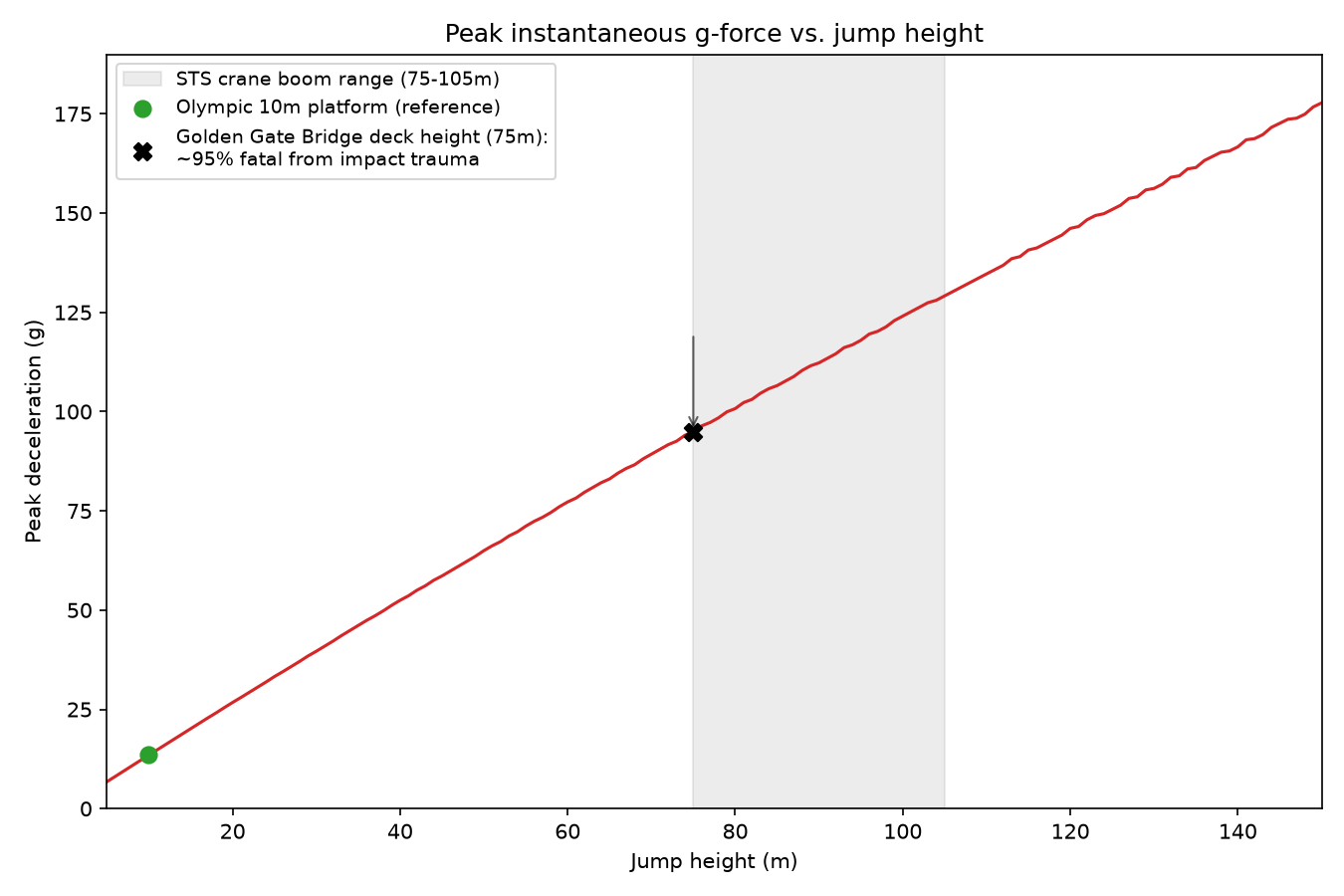
Essentially, no matter how fast the diver hits the water, they will reach a speed of 0 m/s in about the same amount of time. That's the surprising result here: someone hitting the water at 10 m/s comes to a stop at about the same time as someone hitting the water at 100 m/s.
By the criteria I started with, Ferry Bro had already won. A 75-meter jump landed Bob almost exactly in our acceptable twelve-foot range, and that result held across a surprisingly broad range of assumed energy losses. I rate his claim:

That still left one problem: I had built two models that agreed with each other, but models agreeing with models isn't the same thing as reality agreeing with the models.
So I went looking for something outside the analysis.
Sensemaking🔗
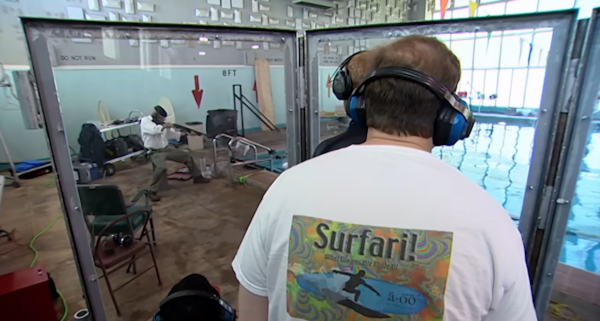
So do the models match reality? Actually -- YES! In Mythbusters Season 3, Episode 21 "Bulletproof Water", they tested the myth that you could escape gunfire by swimming just a few feet under water. Their findings? Supersonic bullets, even the Barrett 50 BMG, disintegrated in less than 3 ft (~1m) of water. Slower-moving rounds traveled further, but mostly stopped after about 8 ft (~2.4m).
In other words, hitting the water 2x faster doesn't translate to 2x the penetration. It's more like "the faster an object hits the water, the more devastating it is to the object." The Mythbusters' slower-moving bullets traveled further than the more powerful 50 BMG because the latter was so fast it was simply destroyed in the collision.
But what about humans? Well, the Federation of Aquatic Sports (FINA) recommends that Olympic high divers compete in a pool that is at least 16 feet deep. Keep in mind that the water in a swimming pool is a little less dense than seawater, so a dive from the same height will go a little deeper in a regular pool than the ocean. And the 16 feet includes a generous factor of safety (I don't know what's used to design swimming pools, but in civil engineering, you often see 2.0 used for buildings, and anywhere from 2.0-4.0 in aerospace).
In other words, a factor of safety of 2.0 for Olympic athletes leading to a recommended minimum depth of 16 ft means they expect a typical high diver to only reach a maximum depth of up to 8 ft.
There's an additional, sadder fact to contend with. 380 miles or so north of San Pedro is the Golden Gate Bridge in San Francisco. At its height, it's 245 ft (75 m) above the ocean. If you ever walk along that bridge, you'll see these signs posted everywhere:
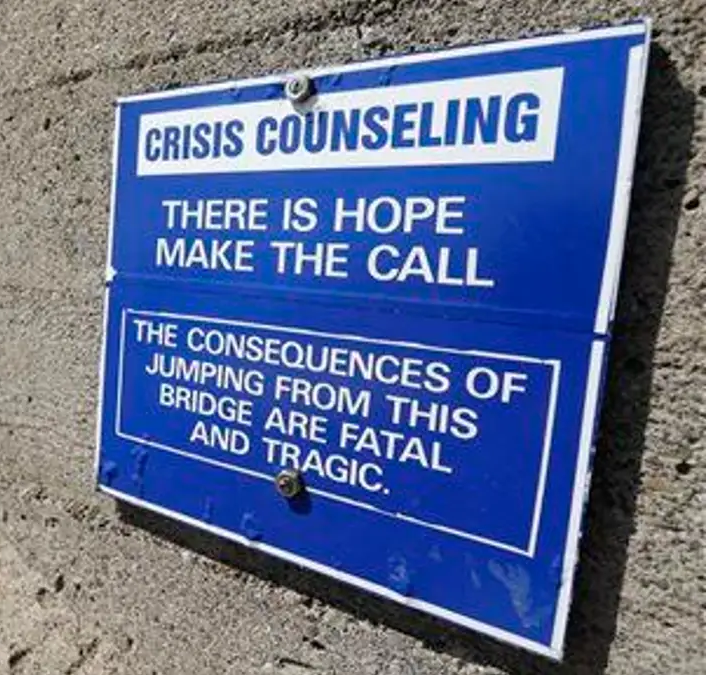
The analysis underscores, indirectly, why leaping from this height has a fatality rate in excess of 95%. The physical trauma of hitting ice-cold water at 75 mph and experiencing a force 95x as strong as gravity is devasating to a human body.
What If Bob Jumped From Space?🔗
I mean, we spent all this time modeling. Why not take it to an extreme? That's like spending an afternoon on Sim City and not calling in an alien attack. What even is the point?
Suppose the engineers working on the kinetic orbital strike earlier have deployed their system on a satellite, dubbed "Bobs From God". This satellite has been tasked with delivering Bob to the San Pedro port.
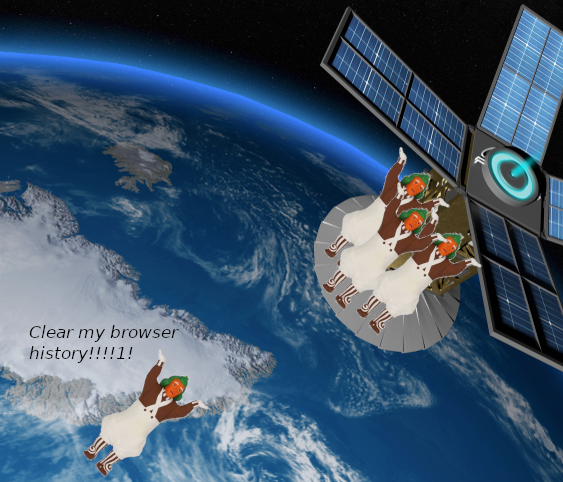
How far into the ocean will Bob go now? Well, the math changes considerably. Let's assume he starts in low Earth orbit (LEO), about 1000 miles above the surface of the Earth. The atmosphere here is negligible for the purposes of a jumper. For much of the fall, Bob experiences no air resistance at all. He's just accelerating towards the Earth at a rate of 6.25 m/s^2 (not a typo -- at this distance, the Earth has noticeably lower gravitational effect).
At this point, terminal velocity is a meaningless concept. We'd actually work out the free-fall speed via specific orbital energy:
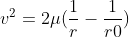
where μ = g0·R^2 and r = R+y (distance from Earth's center).
It's just about where he crosses the Kármán line, around 62 miles up, that his little booties begin to tingle as he nears the end of the thermosphere. He's now moving at around 10,791 mph. As the atmosphere thickens, he begins to heat uncontrollably, the very atoms of his rigid body of average human density struggling desperately to retain their composure.
Finally, he explodes somewhere over Texas:

Not content to miss a delivery, the engineers send the next Bob, this one encased safely inside a 0.6m diameter tungsten rod:

The rod hits the water around Mach 10, or 7,636 mph, roughly 4x faster than the bullet coming out of Jamie's 50 BMG. But there's a snag: how do we measure the water line? Because the rod is preceded by a wave of plasma that stikes the ocean surface first and begins to vaporize the water.
The energy released in the collision is roughly equal to that of a small tactical nuclear bomb. In the final femtosecond of his existence, Bob strikes the port floor as he and his tungsten conveyance are obliterated, along with many ships and the cranes the Bobs were jumping from in the first place:

There's No Science Like Bro Science🔗
Now that we've nuked the whole stupid port, let's talk about takeaways.
There's an entire body of knowledge in this world that rests upon an epistemic foundation of "trust me, bro." If you ever want to give yourself an aneurysm, just ask a gym bro about nutrition. (That's how I learned that soy protein spikes estrogen and will cause dudes to develop breasts). And remember that time Marilyn Manson had a couple ribs removed?
Even the most discriminating minds aren't immune to internalizing this category of information. Belief bias is the name for our tendency to accept without question claims that seem plausible, and reserve interrogation only for those which seem implausible. That humans only use 10% of their brains or that the Great Wall of China is visible from the Moon reside in perfect verisimilitude in the brains of a lot of smart, educated people, despite being incontrovertibly wrong.
If I'm being honest, this is the one that gets me more than it should. If Ferry Bro had followed up with, "yeah, they did a study on it," there's a good chance I would have internalized the information without much thought. It was only his absolute certainty in such a preposterous-sounding claim that I felt morally obligated to look into it.
But the truly wild thing is that every so often some insane-sounding nugget of bro science turns out to be absolutely correct. So the fact that some wild, baseless claim is made by a random bro on a boat doesn't necessarily negate its veracity.
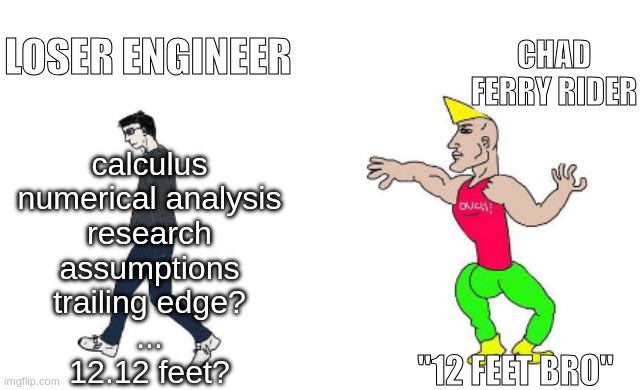
Confidence and incredulity are no substitutes for evidence, but I guess every methodology has its edge cases.
I could draw some grand conclusion here about careful modeling, explicit assumptions, falsification, and separating intuition from reality.
Or I could acknowledge that I would have saved myself an enormous amount of time by just trusting the bro (and, annoyingly, he'd have the data on his side).
Surely you jest, bro? Turns out, not really.